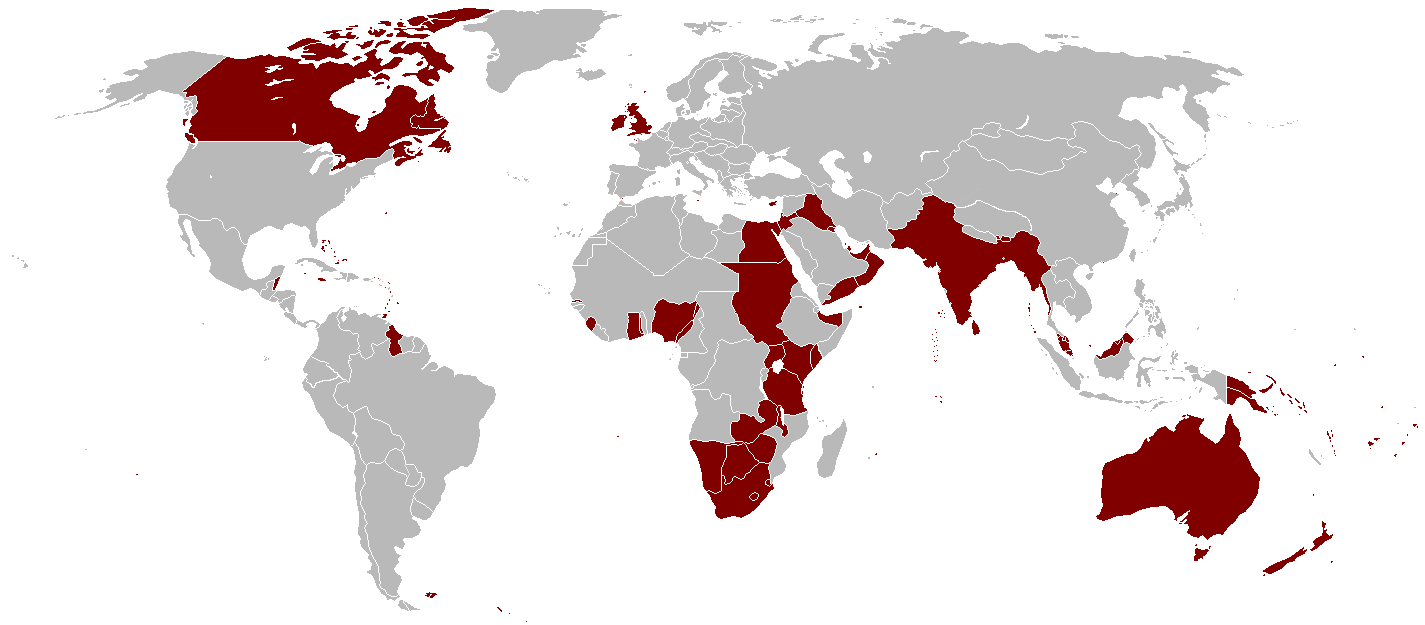
Image credit: Illustrative map of British imperial territories circa 1921, by Vadac and Wikimedia Commons contributors, public domain. Borders and territorial statuses are simplified. Original file unchanged; card display may be cropped.

The end of an empire does not bring an immediate end to its influence. Borders remain. Institutions endure. Disputes over land, identity and political power can continue long after colonial officials have departed.
In my view, the legacy of the British Empire deserves more critical attention than nostalgic accounts of imperial achievement often allow. That does not mean treating British rule as the sole explanation for every later conflict. It means examining how particular policies shaped the circumstances in which conflict developed.
Historical responsibility is best understood through specific decisions and consequences, rather than sweeping claims about entire peoples.
Partition: independence accompanied by upheaval
The partition of British India in 1947 brought independence alongside enormous displacement and violence. The National Army Museum's account describes the accelerated transfer of power and the uncertainty surrounding the division. [1]
British decisions about the timetable and arrangements for withdrawal are part of that history. So too are competing national movements, communal tensions and the actions of political leaders and armed groups.
Acknowledging those different forces does not erase imperial responsibility. It makes the examination more precise. The question is how power was exercised and relinquished, and how decisions made at the top affected people with little control over the outcome.
Kenya: the violence of maintaining control
The Kenya Emergency exposes a different aspect of empire: the use of coercion to sustain colonial authority amid resistance and conflict. Land and political exclusion formed part of the wider setting in which the conflict developed. [2]
In 2013, the British government publicly recognised that Kenyans had suffered torture and ill-treatment at the hands of the colonial administration and announced a settlement of claims. That acknowledgement matters because it concerns documented abuses, rather than a general argument about whether empire was good or bad. [3]
Violence by insurgents does not excuse torture by a governing authority. A serious historical account can recognise harm committed by different actors while holding each responsible for its own conduct.
Palestine: competing commitments and unresolved questions
Britain's administration of Palestine brought together commitments that proved deeply difficult to reconcile. The Mandate incorporated support for a Jewish national home while also carrying obligations towards the existing population. Immigration, competing national aspirations, persecution in Europe and violence all shaped the period. Britain referred the question to the United Nations in 1947. [4]
This history is essential context, but it is not a complete explanation of everything that followed. Later wars, governments, movements and international decisions also carry their own responsibilities.
The point is not to collapse a complex conflict into a single cause. It is to resist accounts that begin only after imperial decisions had already helped shape the political landscape.
What an honest reckoning requires
Maps can make borders look settled and inevitable. People who lived through their creation often experienced them very differently. A useful reading of imperial history asks whose interests were prioritised, whose voices were excluded and what institutions were left behind.
It should also distinguish criticism of states and policies from hostility towards people on the basis of nationality or ancestry. Present-day citizens do not inherit personal guilt for every action of a former empire. Governments and institutions can nevertheless have responsibilities to acknowledge, investigate and address historical harm.
Remembering without simplifying
I believe the strongest argument for confronting imperial history is that it improves our understanding of the present. Selective memory makes it easier to repeat comforting stories and harder to recognise how power operates.
An honest account will contain uncertainty, disagreement and multiple causes. It can still reach clear moral judgements about dispossession, torture and the denial of self-determination. Complexity should deepen accountability, not dissolve it.
Opinion and historical commentary by Charuka Abhayawickrama.
Sources and further reading
- National Army Museum: Independence and Partition, 1947
- National Army Museum: Kenya Emergency
- UK Government: Statement to Parliament on settlement of Mau Mau claims, 2013
- United Nations: History of the Question of Palestine
Share this article
A PRIVATE CONVERSATION
Share your thoughts
Have a question or a perspective to share? Send me a private message about this article. Your message and contact details will not be published.