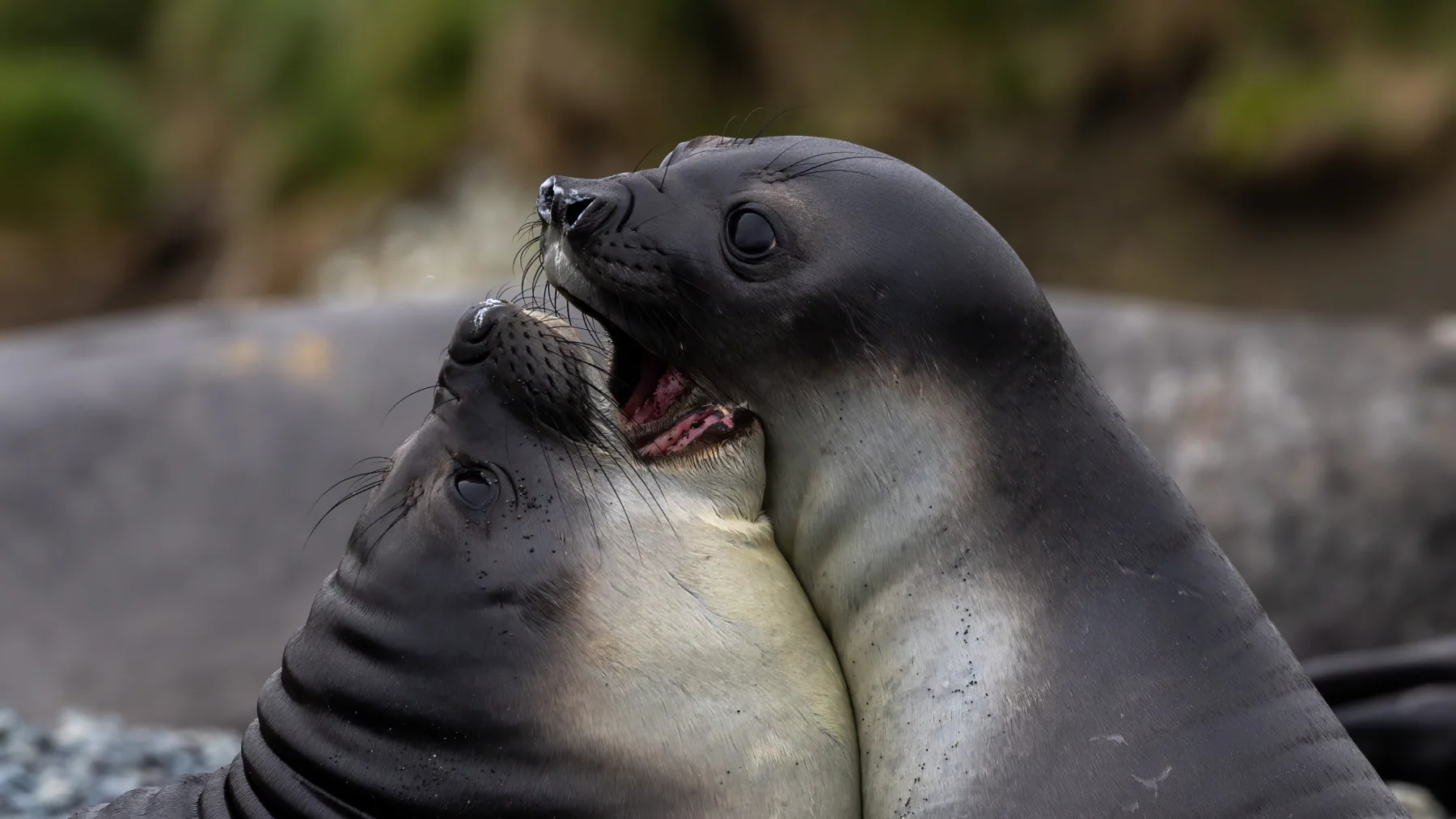
When I visited Macquarie Island in 2022, its wildlife left a lasting impression on me. Royal penguins, elephant seals and albatrosses made the island feel extraordinarily alive. As a photographer, I was drawn to its beauty. As a traveller, I wanted to understand the history behind what I was seeing.
That history changes the experience. The island is not simply a remote refuge untouched by people. It is a place where exploitation, protection and restoration have all left their mark.
Wildlife at the Edge of the World
A photographic journey through elephant seal encounters, penguin colonies and the extraordinary coastline of Macquarie Island.
All photographs: Charuka Abhayawickrama, Macquarie Island, 2022. Images are presented without automatic cropping in the main viewer.
A landscape once valued for what could be extracted
After the island's recorded discovery in 1810, commercial exploitation placed severe pressure on its seals. Penguins were also killed for oil. Animals that we now travel great distances to observe were once treated primarily as raw materials. [1]
It is difficult to reconcile that history with the experience of watching wildlife in its own habitat. Yet the contrast is precisely what makes Macquarie Island so thought-provoking. The natural world did not change its intrinsic value. Human attitudes and priorities changed.
The licence for commercial exploitation was revoked in 1919, and the island became a wildlife sanctuary in 1933. Protection developed over time; it was not a single moment that immediately resolved every threat. [1][2]
Protection required more than a declaration
Introduced animals created further pressures. The eventual programme to eradicate rabbits, rats and mice was declared complete in 2014, following a demanding conservation effort. [3]
That achievement matters because it demonstrates that restoration is an active undertaking. It requires expertise, funding, difficult decisions and monitoring after the most visible work has finished.
It also calls for humility. Recovery does not recreate an untouched past, and extinction cannot be reversed by declaring a place protected. What conservation can do is reduce continuing harm and give surviving ecosystems a better chance.
What this history suggests about energy
Macquarie Island also made me reflect on the systems we regard as normal today. Industries that once seemed economically necessary can become unacceptable as knowledge, technology and public expectations change.
There is a useful parallel with the transition towards cleaner energy. It is a parallel about our capacity to change, rather than a claim that wildlife exploitation and modern electricity systems are identical problems.
Energy supports homes, transport, hospitals and livelihoods. Changing how it is produced requires reliable alternatives, infrastructure and attention to the people and communities affected. Renewable-energy projects also need careful planning to minimise harm to habitats and wildlife.
For me, the lesson is that complexity should encourage better decisions, not become a reason to avoid making them.
The role of photography
A photograph can show an animal's beauty. It can also invite a deeper question: what allowed this animal to survive here, and what will determine whether it continues to do so?
I want my wildlife photography to make room for both responses. Wonder matters, but so does the history behind the landscape and the work required to protect it.
Choosing a different future
I left Macquarie Island thinking about what can change when society begins to value nature differently. Its story does not offer a guarantee that every damaged ecosystem will recover. It offers something more useful: evidence that human choices can change direction.
We inherit the consequences of earlier decisions. We also make decisions that others will inherit. That is a responsibility worth taking seriously.
Sources and further reading
- Australian Antarctic Division: Macquarie Island history
- Tasmania Parks and Wildlife Service: Macquarie Island World Heritage Area
- Australian Antarctic Division: Cultural heritage and pest eradication
Share this article
A PRIVATE CONVERSATION
Share your thoughts
Have a question or a perspective to share? Send me a private message about this article. Your message and contact details will not be published.